 |
| Gratuitously beautiful Cape Cod sunset |
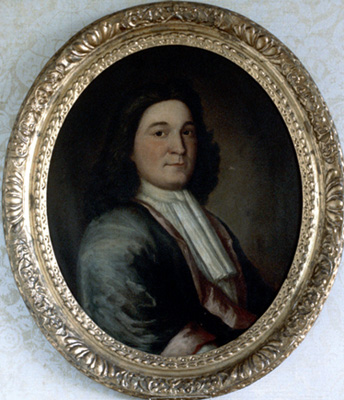
In my last post, I mentioned my interest in the Kinney line. Although my great-great-grandmother, Julia Kinney, was born in Nova Scotia, her family was originally from Massachusetts. While filling out some details of her ancestry, I came across the story of Samuel Osborn, the Rebel Reverend.
Let's be clear: by the strict standards of Puritan New England, it didn't take much to be a rebel. Still, my eighth great-grandfather was at the heart of a 20-year rumpus that I'll call the Cape Cod Calvinist Kerfuffle. The following description of his life comes most from the
The Doane Family, written in 1902 by A.A. Doane, and based on the information given by Israel Doane, Samuel's grandson (and my sixth great-grandfather)(1). However, there are a number of other sources on his life, including a pamphlet he wrote stating his own side in the CCC Kerfuffle (2).
Samuel Osborn was born around 1685 in Scotland, although his parents were from Ireland. He was educated in Glasgow, then received an advanced degree from the University of Dublin. He arrived in Boston in 1707 with letters of recommendation from well-established church men in County Down. We don't know what he did to make a living those first few years, but we do know that he courted a young woman by the name of Mercy Norton on Martha's Vineyard because sometime in 1710 or 1711, she had a son she named Samuel Osborn Jr.
Despite modern usage of the word "puritanical", the Puritans were not opposed to sex, even premarital sex. In fact, premarital pregnancy was rather common (as many as 40% of women were pregnant or had children before marriage), and this may have been encouraged as a way of ensuring that a couple was both compatible and fertile. The assumption, though, was that the couple would marry before (or shortly after) the baby was born. Samuel Osborn did not marry Mercy Norton, however, claiming that she had been 'loose' in her behavior and that he had no reason to believe the child was his. It's worth pointing out, however, that a) most illegitimate children were not named after their fathers, if their fathers refused to admit paternity; b) Samuel Osborn was known to have spent time with the boy, because, he claimed, it was a normal, neighborly, totally not-awkward thing to do; and c) there is some evidence that Samuel Jr. came to live with Samuel Sr. and his family when his mother married.
So, yeah, totally not his son.
 |
The Hoxie House, Sandwich, MA
home of Reverend John Smith |
On January 1, 1710, presumably (possibly?) after he and Mercy had parted ways, Samuel Osborn married Jedidah Smith, my eighth great-grandmother. Samuel's choice of wife may have been an early sign of his 'radical' religious leanings. Her paternal grandfather, Reverend John Smith, was the minister of Sandwich, Massachusetts, one of the more liberal communities in the region. After attending Quaker meetings and listening to their community concerns, he lobbied for the repeal of colonial laws that prescribed the practice of their religion.
The Hoxie House, one of the oldest surviving Cape Cod homes and now a museum, was his residence.
Jedidah's maternal great-grandfather,
Reverend Thomas Mayhew, was the leader of the European settlement on Martha's Vineyard. He required all members of the settlement to buy their land properly from the Wampanoag who owned the land, he learned the Wampanoag language, and he set up a school teaching Native youth Greek and Latin. Because the relationship between the Wampanoag and the Martha's Vineyard European settlement was so good, it was one of the few peaceful places in New England during
King Phillip's War. Relative to his contemporaries, Thomas Mayhew was practically a saint. In other words, he acted like a decent human being. (Granted, he tried to set himself up as a hereditary aristocrat but, hey, nobody's perfect. Perhaps in restitution,
his great-great-grandson coined the phrase "No taxation without representation.")
 |
| Governor Thomas Mayhew of Martha's Vineyard |
In marrying Jedidah Smith, then, Samuel Osborn was allying himself with a family that had a reputation for tolerance and mercy, admittedly only in comparison to the rather low standards of Puritan New England. The young couple began their life modestly. Samuel was a schoolmaster at Edgartown (near Sandwich) in 1712, in Harwich in 1713, and in Plymouth by 1715 or 1716. In 1717, he was called to serve as minister in the church at Eastham (Orleans), and so began the Cape Cod Calvinist Kerfuffle.
At heart of the Kerfuffle was the personal animosity of Reverend Nathaniel Stone, minister of Harwich (Brewster) since 1700 (3). Stone was not a well-liked man, described by contemporaries as arrogant, self-aggrandizing, and a toady. He was also not above attacking others for his own gain. Let's just say that
Cotton Mather -- he of Salem witch trial fame -- described Stone as too quick to stir up trouble, and leave it at that.
Reverend Stone's congregation of Harwich was the nearest neighbor to that of Eastham, and although he had no authority there, he still objected to their new minister. The objections he gave were theological and moral, as well as national -- Irishmen were not well-respected in that time and place -- but one wonders what the personal relationship was between the men. Samuel Osborn had been schoolmaster in Harwich four years earlier, and his wife, Jedidah, was the first cousin once removed of Reverend Stone's wife, Reliance Hinkley.
Reverend Stone arranged for a letter protesting Samuel Osborn's ordination as minister, signed by three men and thirteen women (including Hannah Hobart Doane), and delivered by Hannah Doane's husband, John. (Note: John Doane was my first cousin, many times removed.). Osborn attacked the letter, particularly the implication that women should have any say in the running of the church. With his deacons, John Paine and Joseph Doane, he convinced all but one signer to withdraw their objection. The last, obstinate holdout was Hannah Doane, who having reached the age of fifty and loosing her son at sea, had no f-$!s left to give. She never did back down in her fight against Osborn and was eventually excommunicated for her "ungodly carriage" (i.e. unwillingness to shut up while possessing two X-chromosomes).
Quick genealogical/inbreeding note: Samuel Osborne's deacon, John Paine, was likely a relative of
 |
Honest to goodness gold from an honest to goodness pirate
treasure chest, recovered from the excavations of the Whydah |
some sort, since Paine was his mother-in-law's maiden name. His other deacon, Joseph Doane, the cousin of John Doane, was my 8th great-grand-uncle. The Cape Cod Calvinist Kerfuffle was no big deal to Joseph, who was known at the time for capturing nine pirates from the
Whydah, the flagship of
Captain "Black Sam" Bellamy. The
Whydah was rediscovered and excavated in 1984. Both excavations and artifacts can be visited at the
Whydah museum in Provincetown, Massachusetts, as can the
original jail in Barnstable, where Joseph delivered the pirates.
By the end of 1718, it appeared that the Cape Cod Calvinist Kerfuffle was at an end. Reverend Osborn was permanently fixed in Eastham, and Reverend Stone was chewing his liver in nearby Harwich. But for people who raised their own food, built their own houses, created all their own household items, and bore about ten children each, they had a shocking amount of free time on their hands to snipe at each other. The two congregations spent 20 years competing for members and fighting over theological niceties, before Reverend Osborn was finally ousted by the local "squire" Nathaniel Freeman (yeah, I'm related to him, too, as first cousin ten times removed) and Deacon Joseph Doane, who had switched sides. Maybe he got bored by the lack of pirates in his life and wanted to stir the pot a little.
Samuel Osborn was removed on suspicion of
Arminianism, which all Good Calvinists (like the Puritans) considered heretical. I'm not the best person to explain the theological difference here because a) I'm Catholic and I don't understand how any congregationalist religion can accuse someone of heresy when there's no structure to determine what is orthodoxy; and b) I don't care that much. But, basically, as I understand it: Good Calvinists believed in predetermination. In other words, people like Reverend Stone would go to heaven because that was God's will. Whomever God's will turned against was doomed to hell. (You'll be shocked to hear that God's will for individuals bore a strong resemblance to Reverend Stone's personal opinion of them.) Arminianists, on the other hand, allowed some measure of personal responsibility in a person's moral choices. A person could, for instance, reject God's mercy, thereby dooming themselves to hell when they were intended for heaven. That suggested there was no predetermination, which every Good Calvinist knew was a Lie of Satan deserving of Fire and Brimstone.
Samuel Osborn never again ministered to a congregation. He attempted to move to Maine, but Reverend Stone and his allies wrote letters to the congregations there warning of his heretical ideas, and they turned him away. Mercy and tolerance weren't just uncommon in Puritan New England, they were dangerous. Giving up on the ministry entirely, Reverend Osborn opened a school in Boston and taught there until he died in 1774. His reputation was redeemed by later generations, including Henry David Thoreau, who
admired his practical, pastoral approach in teaching his parishioners how to dry and store peat for fuel (score one for the Irish!). The last laugh, of course, went to Reverend Osborn when, after Reverend Stone's death, his church became Universalist.
References:
(1) The book is available on-line through Google: https://books.google.com/books?id=qu5EAAAAYAAJ&pg=PA499&lpg=PA499&dq=reverend+samuel+osborn&source=bl&ots=tCxM3hS7TM&sig=3XpRXuMRQQTXmnBYhf3DPqyyd5M&hl=en&sa=X&ved=0ahUKEwjG1KrD4q3MAhWos4MKHcj3B2wQ6AEIKDAC#v=onepage&q=reverend%20samuel%20osborn&f=false
(2)
A Church of Christ Vindicated, published in Boston in 1724
(3) Most details of this conflict come from:
Paine, Gustavus Swift, 1952, Ungodly Carriages on Cape Cod. The New England Quarterly 25: 181-198 http://people.brandeis.edu/~dkew/David/Swift-Cape_carriages-1952.pdf